Why Localised Production Is the Cure
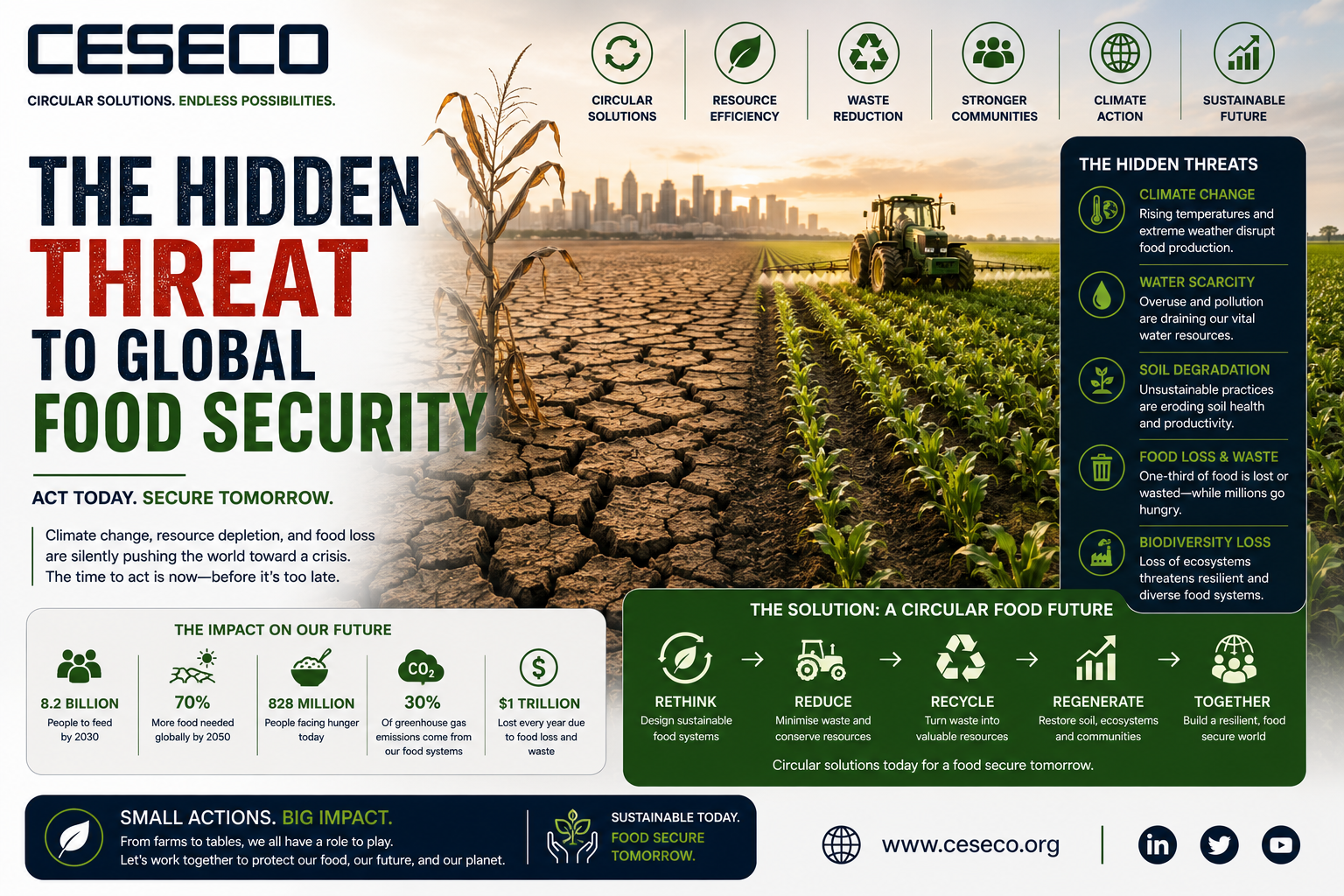
In a world chasing scale, speed, and global efficiency, one microscopic enemy is silently undermining our food security: plant pathogens. From soil-borne fungi to bacterial blights and viruses carried across borders via packaging and supply chains, plant diseases account for over 20–40% of global crop losses annually, according to the UN Food and Agriculture Organization (FAO).
The solution? It’s not just about chemicals, genes, or global oversight. It’s about rethinking the entire food production model—from source to supermarket. And that’s where CESECO is pioneering change.
Understanding Plant Pathology in the Global Age
Plant pathology—the study of plant diseases and their ecological, biological, and economic impact—has become one of the most urgent disciplines in modern agriculture.
Recent studies from Wageningen University and the American Phytopathological Society show:
- Increased cross-border food transport correlates with higher incidence of invasive pathogens.
- Longer shipping times allow time for latent diseases to spread through packaging, water, and air systems.
- Monoculture farming, often far from end markets, increases susceptibility to blight, rust, and viral outbreaks.
These findings support a hard truth: global supply chains are fragile not just economically—but biologically.
Localised Production: A Scientific Solution to Plant Health
Reducing pathogen spread means re-localising our food systems:
- Produce closer to where it’s consumed shortens the chain and reduces transit-related exposure.
- Controlled environments like CESECO’s automated greenhouses allow disease tracking, prevention, and rapid response.
- Organic input cycles, including CESECO’s refined animal by-products and natural fertilisers, improve plant immunity and soil microbiome resilience.
According to the 2024 IPPC (International Plant Protection Convention) report, local, diversified agriculture with integrated waste recycling reduces plant pathogen exposure by 60–80% compared to long-haul monoculture models.
How CESECO Is Pioneering Safe, Local Food Systems
At CESECO, plant health and human health are inseparable. Our model addresses both.
- Circular Inputs = Stronger, Safer Plants
Our eco parks process organic waste into refined fertilisers, clean water, and plant protein inputs—free from pathogens and heavy metals. These support robust root systems and pathogen resistance without synthetic pesticides.
- Onsite, Automated Greenhouses
We deploy smart-controlled vertical and horizontal growing systems. These use sensors, climate control, and disease modelling to detect and prevent outbreaks before they spread.
- Closed-Loop Nutrient & Water Recycling
By integrating processing and production on a single site, we eliminate the contamination risks often introduced via external suppliers or trucked-in soil and compost.
- Localised Distribution
Our “grow and distribute local” strategy drastically cuts:
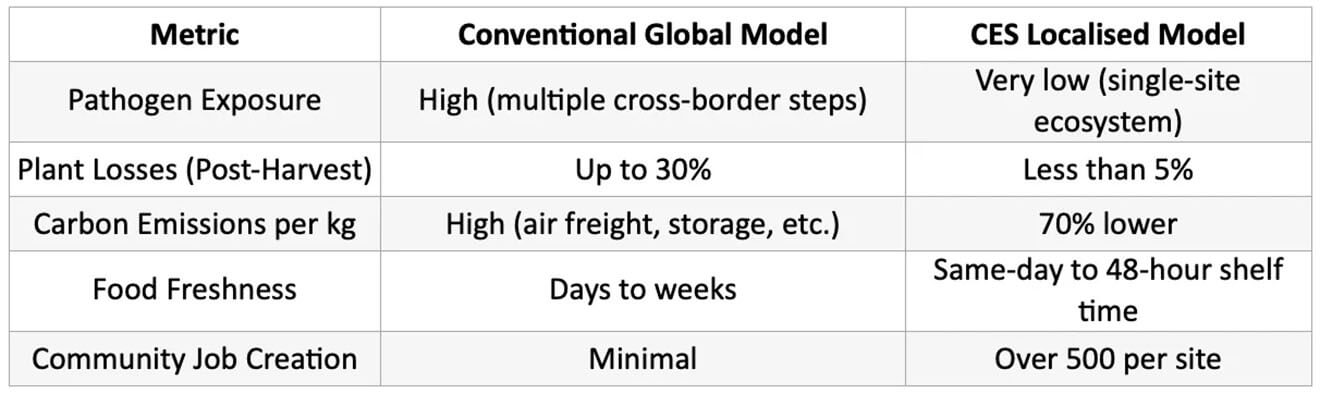
- Shipping times (from weeks to hours)
- Handling points (from 10+ to 2–3 max)
- Packaging use (by up to 85%)
This makes the supply chain not only safer, but more sustainable, fresher, and lower-carbon.
Real-World Impact: Safety, Sustainability, Security
Here’s what happens when you move food production closer to the consumer with scientific rigour:
Beyond Food: A Holistic Approach to Ecosystem Health
Plant pathology doesn’t exist in a vacuum. It’s linked to soil, air, water, waste, and community systems.
CESECO are engineered to support entire ecosystems:
- Biodiversity buffers around greenhouses reduce pest/vector pressure.
- Bio-secure zones isolate crops from animal or industrial risk.
- Educational partnerships with local universities train next-gen plant pathologists, engineers, and agri-tech leaders.
The Road Ahead: Scientific Collaboration & Scalable Impact
We’re working with leading agricultural researchers, data scientists, and climate analysts to refine our models and build resilient plant-based food systems globally—from Texas to Queensland, Cumbria to Hunan.
As we scale, CESECO will become a beacon of plant health resilience, carbon reduction, and community-based food security.
Conclusion: The Future of Food Is Local, Safe, and Science-Led
We can’t afford to ignore the microscopic threats undermining our global food chains. The pathogens don’t wait, and neither should we.
With CESECO, we’re proving that food can be fresher, cleaner, safer—and still profitable, when powered by circular principles and scientific precision.
“Local food isn’t just a nice idea. It’s a global necessity”.
